Sector analysts attribute this dramatic profit expansion primarily to favorable macroeconomic conditions. High liquidity across domestic banks and financial institutions significantly drove down commercial lending interest rates, drastically lowering debt servicing costs for leverage-heavy energy producers.
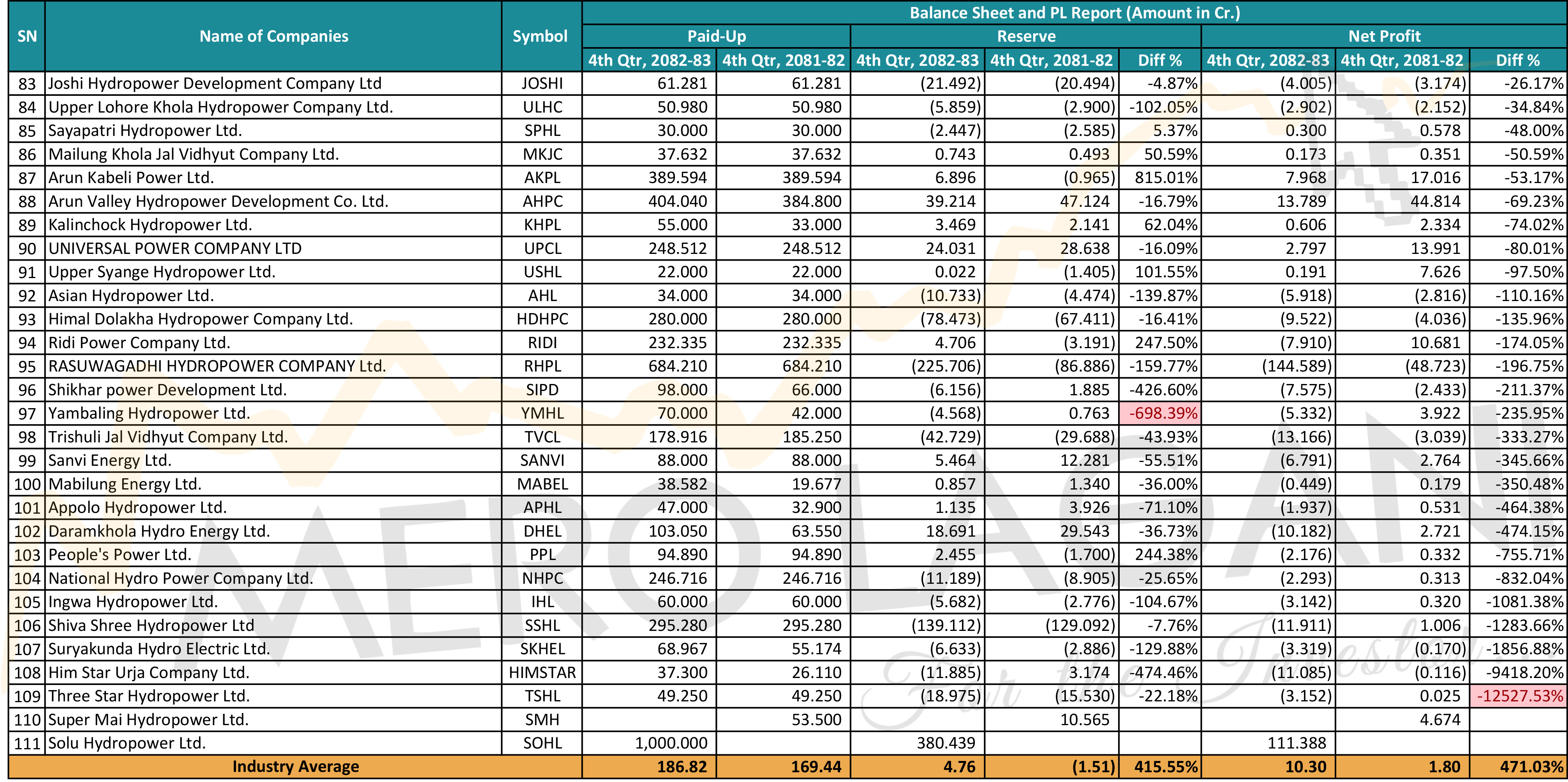
Operational improvements also played a pivotal role. Major projects operated at or near full generation capacity, supported by streamlined commercial transmissions and enhanced coordination with the Nepal Electricity Authority (NEA). Expanded national grid connectivity reduced power spillage, while internal cost-cutting measures further boosted corporate bottom lines.
Front-Runners in Profit and Balance Sheet Strength
Sahas Energy Limited emerged at the forefront of the industry, reporting a net profit of Rs 1.35 billion. The company demonstrated exceptional fundamental health, backed by a paid-up capital of Rs 4.57 billion and a massive reserve fund of Rs 3.68 million. Sahas Energy also reported strong profitability metrics, posting an Earnings Per Share (EPS) of Rs 29.72 and a Net Worth per Share of Rs 180.58. Similarly, Solu Hydropower Limited and Api Power Company followed as major profit drivers, earning NPR 111.38 crore and NPR 96.06 crore in net profit, respectively. Upper Tamakoshi and Mountain Energy Nepal Limited also rounded out the list of top performers.
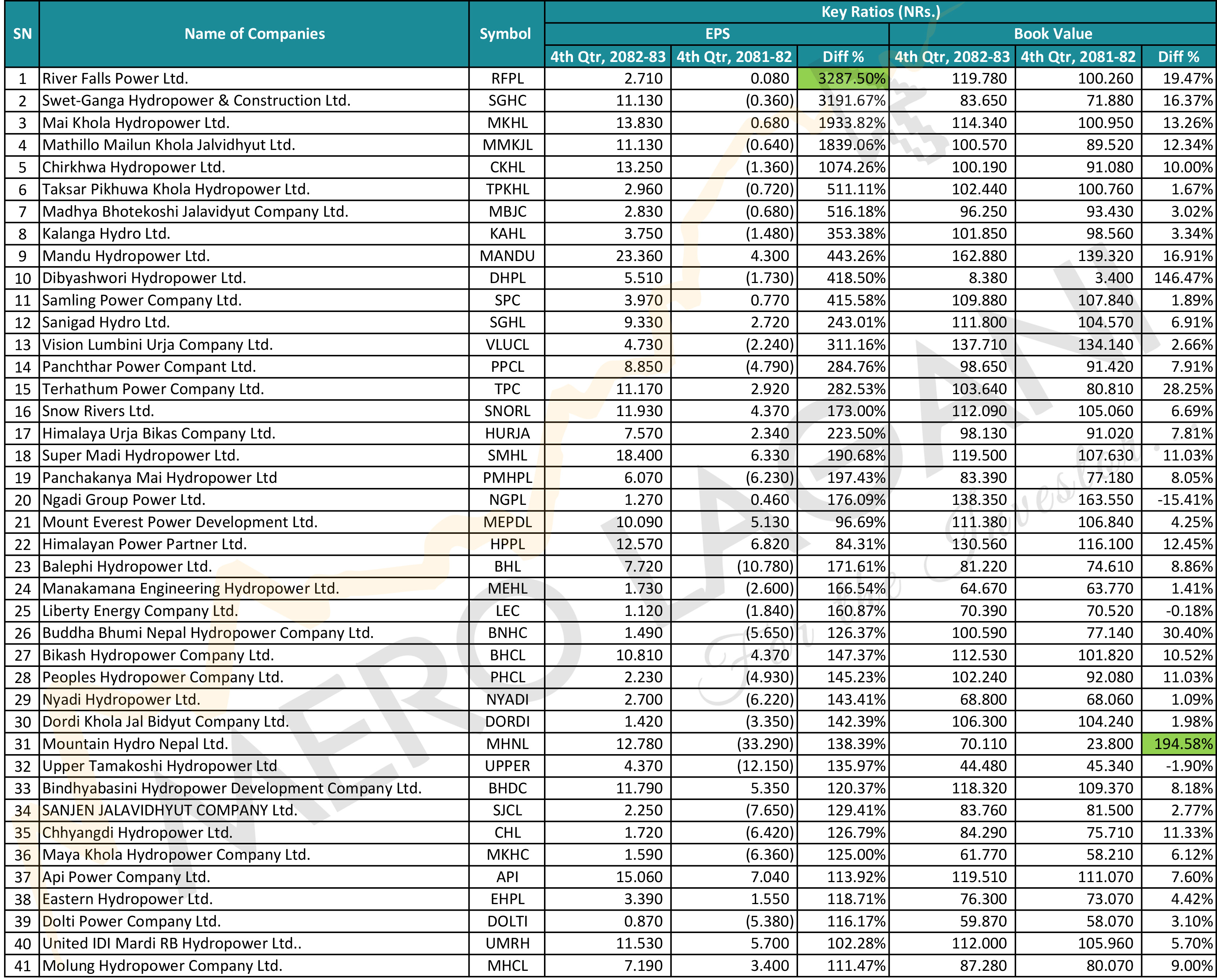
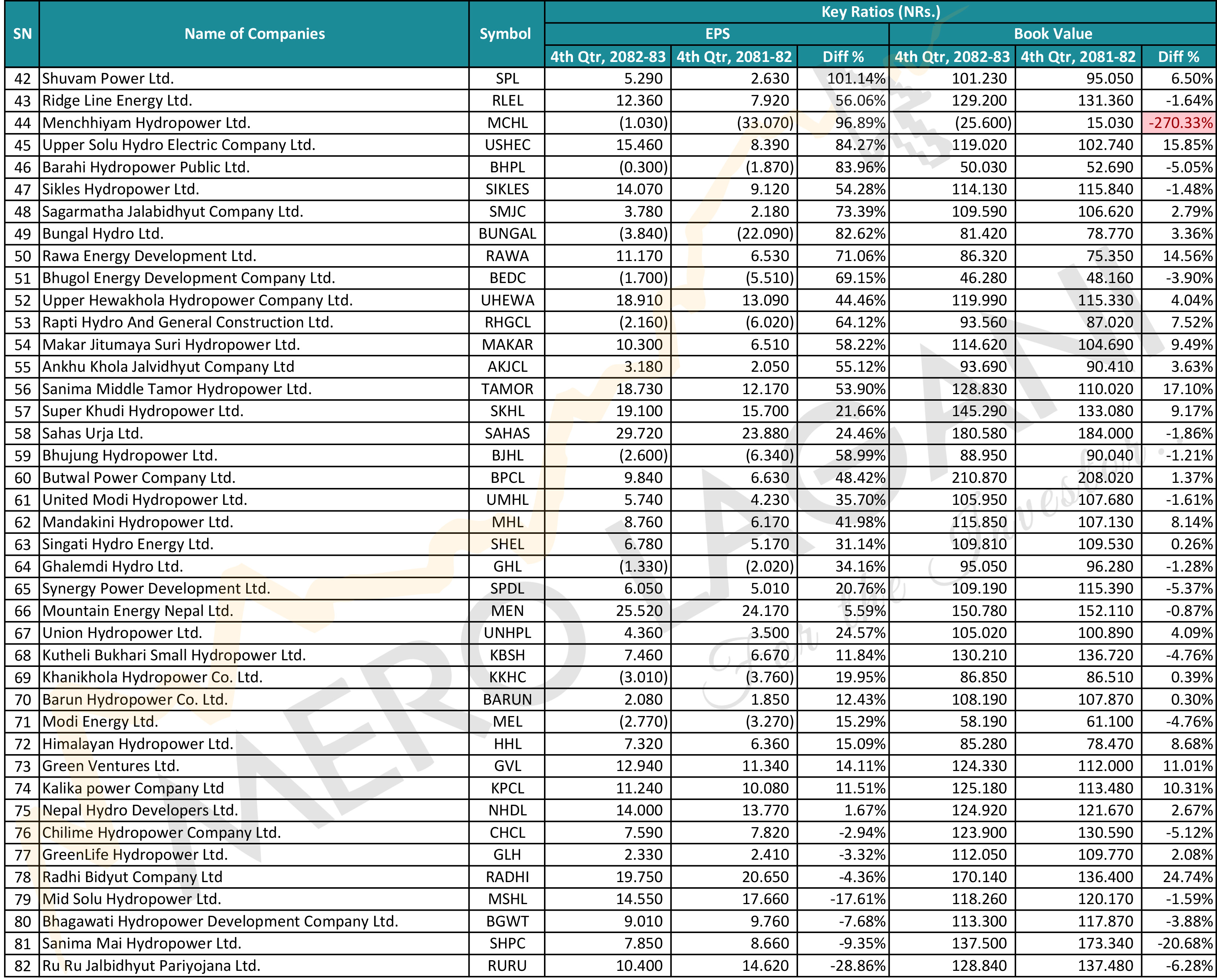
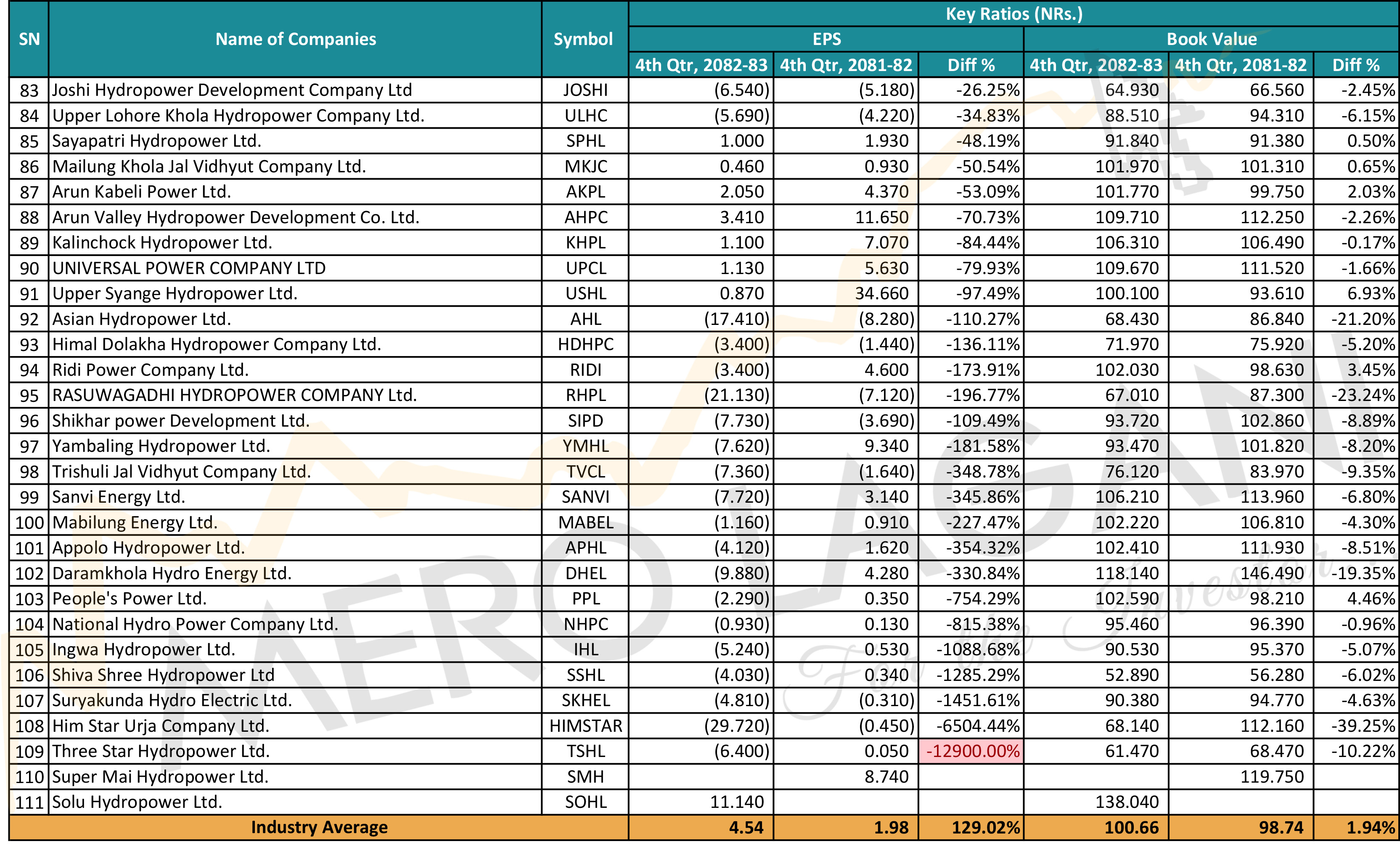
Likewise, Mountain Energy Nepal established itself as a top-tier asset in balance sheet strength, boasting an EPS of Rs 25.52 and the highest Net Worth per Share among its peers at Rs 194.58. Radhi Vidyut Company also reinforced investor confidence by maintaining stable performance indicators, including an EPS of Rs 20.65 and a net worth of Rs 120.71 per share.
Positive Market Sentiment and Future Dividends
Industry operators report that stabilized power purchase agreements (PPAs), reduced capital expenditure following project completions, and improved cash flow cycles have permanently strengthened balance sheets across the energy sector.
With robust reserve funds and expanding earnings per share, market analysts expect leading developers like Sahas Energy and Mountain Energy to easily distribute dividends to shareholders. The strong reserves are also expected to give these companies a distinct financial cushion to pay off outstanding project loans early or fund future power projects without over-leveraging.